 Skip to content


Can Babywearing Help Prevent Flat Head Syndrome? What Parents Should Know

Noticing a flat or uneven spot on your baby's head can be concerning, especially during the first few months. Positional flat head syndrome is relatively common and can develop when babies spend extended periods in the same position.
Babywearing offers another way to carry your baby during supervised, awake periods. However, it is not a proven treatment or guaranteed way to prevent flat head syndrome.
Understanding the causes and following appropriate positioning and safe-sleep practices can help parents make informed decisions.
What Is Flat Head Syndrome?
Flat head syndrome commonly refers to two conditions:
-
Positional plagiocephaly: Flattening on one side of the back of the head.
-
Positional brachycephaly: More symmetrical flattening across the back of the head.
According to the American Academy of Pediatrics (AAP), repeated pressure on a baby's developing skull can contribute to these conditions. Limited tummy time and torticollis, which affects neck movement, can also play a role.
Check Out Tuck and Bundle Baby Wraps

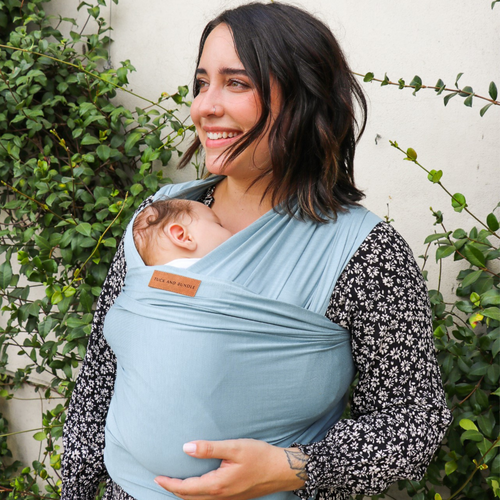
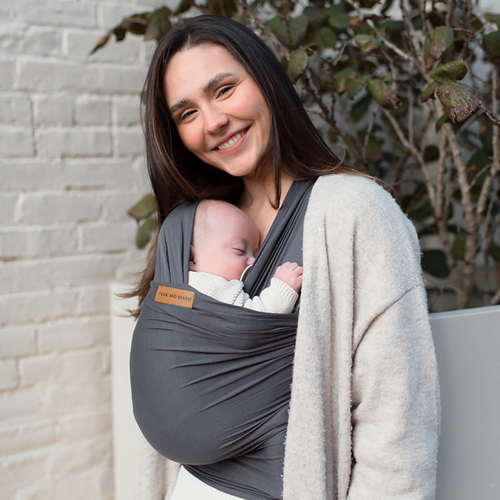
Can Babywearing Help?
Babywearing gives parents another way to carry their babies during awake periods without having them lie against a flat surface.
However, carriers can also put pressure on the back of a baby's head, particularly during extended use. The AAP recommends limiting unnecessary time in carriers and other sitting devices.
Therefore, babywearing should be viewed as one carrying option rather than a proven way to prevent or treat flat head syndrome.
The Importance of Tummy Time
Supervised tummy time helps babies spend time off the back of their heads while strengthening the muscles needed for head control and development.
Parents can encourage tummy time by:
-
Starting with short sessions and gradually increasing the duration.
-
Getting down at their baby's eye level.
-
Using age-appropriate toys to encourage movement.
-
Offering supervised floor play throughout the day.
If your baby consistently struggles to turn their head in both directions, consult your pediatrician.
Safe Babywearing Practices
When using a baby wrap, proper positioning is essential.
Follow these important safety principles:
-
Keep the face visible: Your baby's nose and mouth should remain uncovered.
-
Maintain an open airway: Never allow your baby's chin to rest against their chest.
-
Provide proper support: Follow the manufacturer's wrapping instructions.
-
Check regularly: Monitor your baby's breathing, head position, and comfort.
Newborns require particular attention because they have limited head and neck control.
Read the AAP's baby carrier safety guidance for additional information.
Safe Sleep Always Comes First
Never place your baby on their stomach or side for sleep to prevent a flat spot.
The CDC recommends placing babies on their backs for every sleep, including naps and nighttime.
Always use a firm, flat sleep surface with a fitted sheet. Avoid pillows, blankets, and head-shaping products.
If your baby falls asleep in a carrier or sling, move them to a firm, flat sleep surface as soon as possible.
When Should You Consult a Pediatrician?
If you notice persistent flattening, an uneven head shape, or a preference for turning the head in one direction, speak with your pediatrician.
Some babies develop torticollis, which can restrict neck movement and contribute to uneven pressure on the head. A healthcare professional can assess your baby and recommend appropriate treatment, such as physical therapy, if necessary.
Disclaimer: This article is for general educational purposes only and is not medical advice. Always consult your healthcare provider for guidance specific to you or your baby, and follow current safety recommendations and product instructions.
Our Editorial Process: We may use AI-assisted tools during the research and drafting process. All published content is reviewed and edited by our team. AI-generated information is not a substitute for guidance from a qualified healthcare professional.
Final Thoughts
Babywearing can be one way to vary your baby's position during supervised, awake periods. Combining it with regular tummy time, movement, and safe-sleep practices helps support healthy development.
At Tuck and Bundle, our baby wraps are designed for babies weighing 8–35 pounds, helping parents keep their little ones close during everyday activities.
For concerns about your baby's head shape or development, always consult your pediatrician.
Sources and Further Reading
Frequently Asked Questions
Can babywearing prevent flat head syndrome? ▾
Is babywearing safe for newborns? ▾
Should my baby sleep in a baby wrap? ▾
Does tummy time help with flat head syndrome? ▾

Miranda Tripp
Miranda Tripp is the founder of Tuck and Bundle, a babywearing brand created to help parents keep their babies close, comfortably and confidently. A mom of three, U.S. Army veteran, and entrepreneur with a background in engineering, Miranda founded Tuck and Bundle after experiencing firsthand how transformative babywearing could be in everyday motherhood. She brings a practical, parent-first perspective to conversations about babywearing, postpartum life, and building products that genuinely make life with a baby a little easier.