 Skip to content


Are Baby Carriers FSA/HSA Eligible? The Complete Guide

If you have money in an FSA or HSA, you may be wondering if you can use it to purchase a baby carrier or wrap.
The answer isn't always straightforward.
Baby carriers aren't generally considered automatically eligible healthcare expenses. However, babywearing can qualify for HSA or FSA spending when the product meets the requirements for a medically necessary expense.
The good news is that we've made the process easier for our customers.
We work with Sika, which allows customers to shop with their HSA or FSA and helps handle the Letter of Medical Necessity process when one is needed. This means you don't have to figure out the paperwork on your own before purchasing your wrap or carrier.
Here's how it works.
Quick Answer
| Question | Answer |
| Are all baby carriers automatically HSA/FSA eligible? | No |
| Can babywearing qualify for HSA/FSA spending? | Yes, when medical-necessity requirements are met |
| Do you need a Letter of Medical Necessity? | Yes |
| Can Sika help with the LMN process? | Yes |
| Can you purchase a wrap using HSA/FSA funds through Sika? | Yes, for eligible purchases |
| Does an LMN guarantee reimbursement from every plan? | No |
What Are FSA and HSA Accounts?
Before looking at eligibility, it's helpful to understand the difference.
Flexible Spending Account (FSA)
An FSA lets employees set aside pre-tax dollars to pay for qualified healthcare expenses.
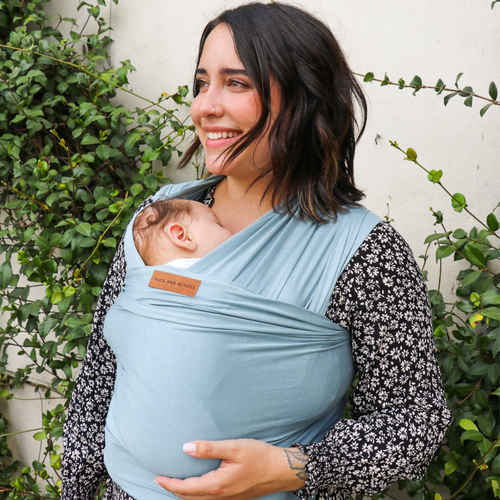
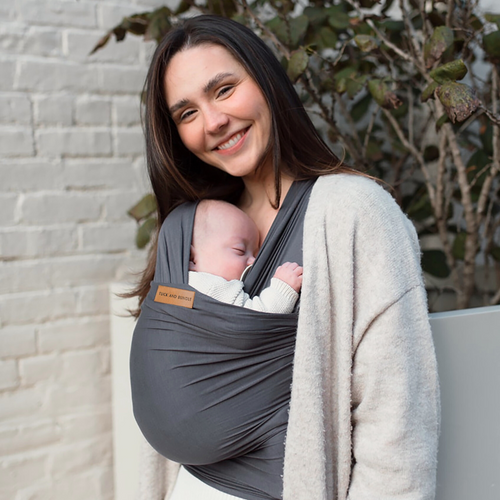
Check Out Tuck and Bundle Baby Wraps

Key points:
-
Offered through employers
-
Annual contribution limits
-
Funds may expire depending on your plan
-
Covers many IRS-approved medical expenses
Health Savings Account (HSA)
An HSA is available to people enrolled in eligible high-deductible health plans.
Benefits include:
-
Tax-free contributions
-
Tax-free qualified withdrawals
-
Funds roll over each year
-
The account stays with you even if you change jobs
Both accounts generally follow IRS rules for qualified medical expenses, though individual plan administrators may have additional requirements. an eligible expense, which is why some everyday products don't automatically qualify.
Are Baby Carriers FSA/HSA Eligible?
Not automatically.
A baby carrier purchased simply for convenience, travel, everyday parenting, or hands-free carrying is generally considered a personal expense.
But babywearing isn't always just about convenience.
For some families, a wrap or carrier can serve a specific medical purpose. When a babywearing product is considered medically necessary and the appropriate requirements are met, it may qualify for HSA or FSA funds.
This is where a Letter of Medical Necessity (LMN) can make a difference.
When Can a Baby Carrier/Wrap Be FSA or HSA Eligible?
There are situations where a baby carrier may qualify if it's recommended by a healthcare provider to treat or accommodate a specific medical condition.
Specific examples include:
-
Flat Head Syndrome (Plagiocephaly): Keeping your baby upright and off the back of the head can help reduce pressure and promote natural skull shape.
-
Colic and Gas Relief: Gentle movement and upright positioning while being worn can help soothe discomfort and support digestion.
-
Low Milk Supply: Increased skin-to-skin contact through babywearing encourages bonding and can help stimulate milk production.
-
Postpartum Depression: Staying physically close to your baby can help improve emotional well-being and reduce feelings of isolation.
-
Hip Dysplasia: Wraps support ergonomic positioning with baby's legs in the “M” shape, which is recommended for healthy hip development.
-
Reflux/GERD: Being worn in an upright position after feeding can help reduce symptoms and improve digestion.
-
Laryngomalacia: Upright positioning helps ease breathing difficulties associated with this condition.
-
Digestive Immaturity: Babywearing can support digestion and comfort for babies whose systems are still developing.
-
Torticollis: Encourages proper neck positioning and provides gentle movement to support muscle development.
-
Postpartum Recovery: Offers hands-free comfort and promotes bonding while aiding physical healing.
In these cases, eligibility often depends on:
-
Medical necessity
-
The specific carrier
-
Your plan's reimbursement rules
-
Supporting documentation
Many plan administrators require a Letter of Medical Necessity (LMN) from a licensed healthcare provider before considering reimbursement.
Important: Receiving a prescription or LMN does not automatically guarantee reimbursement. Your FSA or HSA administrator makes the final determination based on your plan and applicable tax rules.
What Is a Letter of Medical Necessity?
A Letter of Medical Necessity, often called an LMN, is documentation that explains why a particular product is medically necessary.
For products that aren't automatically considered eligible, the LMN provides information about the medical reason for the purchase.
Depending on the situation, it may include information such as:
-
The patient's name
-
The relevant medical condition or need
-
Why the product is needed
-
The type of product recommended
-
The healthcare provider's information
The important thing is that the letter connects the product to a legitimate medical need.
You Don't Have to Navigate the LMN Process Alone
One of the biggest benefits of using Sika is that you don't have to figure out the Letter of Medical Necessity process by yourself.
When you're shopping with us, Sika helps make the process more straightforward.
Rather than wondering:
"Do I qualify?"
"Where do I get an LMN?"
"What paperwork do I need?"
you can go through the HSA/FSA process directly with Sika.
Sika helps customers identify products that may be eligible and provides the LMN process for products that require medical-necessity documentation.
This is especially helpful if you've never used HSA or FSA funds for a product like a baby carrier before.
Does a Letter of Medical Necessity Guarantee HSA/FSA Approval?
It's important to understand that an LMN doesn't mean every HSA/FSA administrator is required to approve an expense.
An LMN provides documentation supporting medical necessity, but your specific plan may have additional requirements.
For that reason, keep your purchase receipt and any documentation you receive through the process.
If your HSA/FSA administrator asks for additional information, you'll have everything you need to support your claim.
How to Buy a Baby Wrap With HSA/FSA Funds
We've partnered with Sika to make it easier for our customers to use their HSA or FSA funds toward eligible babywearing products.
Instead of having to figure out the entire medical-necessity process yourself, Sika helps take care of the documentation process.
Here's what the process looks like:
1. Choose your wrap or carrier.
Shop our babywearing collection and find the wrap or carrier that's right for you.
2. Choose the HSA/FSA option.
When available, select the Sika HSA/FSA payment option when you purchase.
3. Sika handles the medical-necessity process.
When a Letter of Medical Necessity is required, Sika helps you through that process.
4. Receive your Letter of Medical Necessity.
Sika provides the LMN documentation when applicable, so you don't have to spend time trying to figure out where to get one yourself.
5. Complete your purchase.
Once you've completed the Sika process, you can use your HSA/FSA funds to purchase your eligible babywearing product through the available payment option.
The goal is to make the process simple. You shouldn't have to become an expert in HSA/FSA rules just to purchase a baby wrap.
Examples of Potential Eligibility
| Situation | Likely Eligible? |
| Standard baby carrier for everyday use | ❌ No |
| Carrier purchased for convenience while shopping | ❌ No |
| Carrier recommended by a physician for a qualifying medical condition | ✅ Possibly |
| Specialized therapeutic positioning carrier with medical documentation | ✅ May qualify |
| Fashion or luxury carrier | ❌ No |
*These examples are illustrative only. Always confirm eligibility with your plan administrator before making a purchase.
Frequently Asked Questions
Can I use my HSA to buy a baby carrier? ▾
Can I use my FSA to buy a baby wrap? ▾
Do I need a prescription? ▾
Do I have to get a Letter of Medical Necessity myself? ▾
Can I use my HSA/FSA card with Tuck and Bundle? ▾
Are ergonomic baby carriers automatically HSA/FSA eligible? ▾
What if my reimbursement is denied? ▾

Miranda Tripp
Miranda Tripp is the founder of Tuck and Bundle, a babywearing brand created to help parents keep their babies close, comfortably and confidently. A mom of three, U.S. Army veteran, and entrepreneur with a background in engineering, Miranda founded Tuck and Bundle after experiencing firsthand how transformative babywearing could be in everyday motherhood. She brings a practical, parent-first perspective to conversations about babywearing, postpartum life, and building products that genuinely make life with a baby a little easier.