 Skip to content


How to Wrap a Newborn: Step-by-Step Guide

https://www.youtube.com/watch?v=bR-KqiW55W4
If you've ever looked at a baby wrap and thought, "There's no way I'll figure this out," you're not alone.
For many first-time parents, baby wraps can seem intimidating. It's a long piece of fabric and when you're holding a tiny, crying newborn, the idea of getting it wrong can feel overwhelming.
The good news? Learning how to wrap a newborn is much easier than it looks.
With a little practice, you'll be able to put your baby wrap on in just a few minutes. A properly tied baby wrap can quickly become one of your most-used parenting essentials.
In this guide, we'll walk you through everything you need to know: from choosing the right wrap to tying it safely and avoiding common mistakes.
Why Babywearing Is So Beneficial for Newborns
Newborns thrive on closeness.
For nine months, your baby was surrounded by warmth, movement, and the comforting sound of your heartbeat. After birth, being held close helps recreate that familiar environment, making the transition into the outside world a little gentler.
That's one reason babywearing has become so popular among new parents.
When your newborn is comfortably wrapped against your chest, they can hear your heartbeat, feel your movement, and stay connected while you go about your day.
Many parents find that babywearing can help with:
-
Comforting a fussy baby
-
Encouraging naps
-
Promoting bonding
-
Making everyday tasks easier
-
Reducing the need to constantly hold your baby
-
Supporting hands-free parenting
A baby wrap isn't just convenient, it can also make those early weeks feel a little less overwhelming.
Before You Start: Safety Comes First
Before placing your newborn into any baby wrap, take a moment to check that you're wearing it correctly.
The easiest way to remember safe babywearing is the T.I.C.K.S. guideline.
T – Tight
Your wrap should fit snugly against your body. A loose wrap can cause your baby to slump into an unsafe position.
I – In View at All Times
Your baby's face should always remain visible. Avoid covering their face with fabric.
C – Close Enough to Kiss
Your baby's head should sit high on your chest, close enough that you can easily kiss the top of their head.
K – Keep Chin Off Chest
There should always be space between your baby's chin and chest to allow unrestricted breathing.
Check Out Tuck and Bundle Baby Wraps

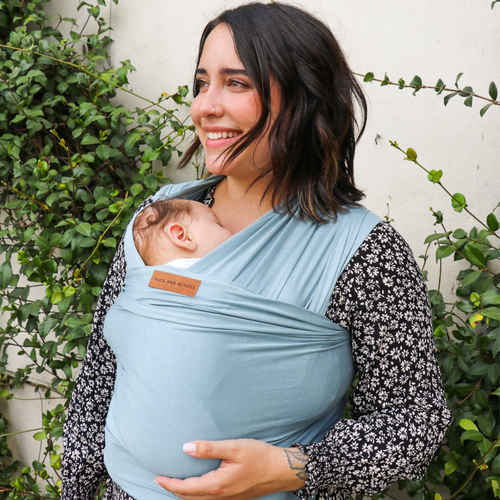
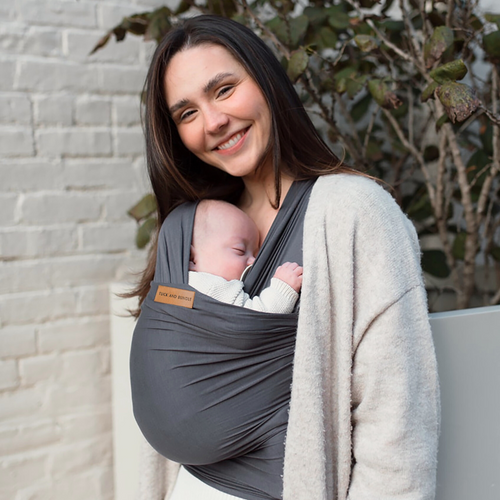
S – Supported Back
Your baby's back should be naturally supported, with their knees slightly higher than their hips in the ergonomic "M" position.
Taking a few seconds to check these points every time you use your wrap can help ensure a safe and comfortable experience for both you and your baby.
Step-by-Step: How to Wrap a Newborn
The Front Wrap Cross Carry (FWCC) is one of the most popular and beginner-friendly wrapping methods for newborns.
Step 1: Find the Center of the Wrap
Most baby wraps have a center marker. The Tuck and Bundle has a leather tag to mark the center.
Place this marker in the middle of your chest.
Step 2: Cross the Fabric Behind Your Back
Bring both ends behind your back, crossing them comfortably before bringing them back over your shoulders.
The fabric should sit flat without twisting.
Step 3: Tuck Each End Through the Waist Panel
Feed each shoulder section underneath the front panel before gently tightening the fabric.
This helps distribute your baby's weight evenly across your shoulders and back.
Step 4: Tie a Secure Double Knot
Tie both ends firmly behind your back or at your side.
The wrap should feel snug but comfortable.
Step 5: Place Your Baby Into the Wrap
Lift your newborn onto your shoulder before gently lowering them into the front pouch.
Guide each leg into position so they naturally form the "M" shape.
Your baby's face should always remain visible and close enough to kiss.
Step 6: Spread the Fabric
Pull each shoulder panel across your baby's back, ensuring the fabric supports them from knee to knee.
Smooth out any bunching to create even support.
Step 7: Perform a Final Safety Check
Before moving around, double-check:
-
Face visible
-
Chin off chest
-
Knees higher than hips
-
Airway clear
Once everything looks good, you're ready to enjoy babywearing!
Common Mistakes to Avoid
Even experienced parents occasionally need to readjust their wrap. Here are a few common mistakes to watch for:
Wearing the Wrap Too Loosely
A loose wrap can allow your baby to slump into an unsafe position. Always tighten the fabric evenly before placing your baby inside.
Covering Your Baby's Face
Never let fabric cover your baby's nose or mouth. You should always be able to see their face. When tucking your baby’s head into the wrap for napping, make sure the fabric does not go farther than their ear.
Baby Sitting Too Low
If you have to lean down significantly to kiss your baby's head, the wrap likely needs adjusting. Your baby should sit high on your chest.
Twisted Fabric
Twists create pressure points and reduce support. Keep the fabric flat across your shoulders and back for maximum comfort.
Ignoring Your Baby's Temperature
Remember that the wrap acts as an extra layer. Dress your baby appropriately to avoid overheating, especially during warmer months.
Frequently Asked Questions
How do I wrap a newborn safely? ▾
Can I use baby wrap from birth? ▾
How tight should a baby wrap be? ▾
How long can my newborn stay in a baby wrap? ▾
What's the easiest baby carrier for first-time parents? ▾

Miranda Tripp
Miranda Tripp is the founder of Tuck and Bundle, a babywearing brand created to help parents keep their babies close, comfortably and confidently. A mom of three, U.S. Army veteran, and entrepreneur with a background in engineering, Miranda founded Tuck and Bundle after experiencing firsthand how transformative babywearing could be in everyday motherhood. She brings a practical, parent-first perspective to conversations about babywearing, postpartum life, and building products that genuinely make life with a baby a little easier.